Interview: Samantha Streit - Letters to Joan – A Lovely New Play
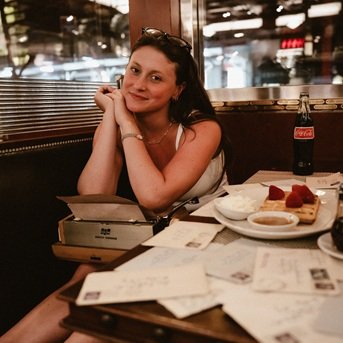
Samantha Streit is a New York–based actor and writer. She is the creative mind behind Letter to Joan, a story based on true events about a granddaughter who uncovers a box of forgotten letters and finds herself slipping between a 1956 Brooklyn summer alive with possibility and a present-day American diner steeped in nostalgia.
Ticket link: https://www.edfringe.com/tickets/whats-on/letters-to-joan-a-lovely-new-play
Venue: Bunker Three at Pleasance Courtyard
When: 5th - 31st August (not performing on 19th August)
Could you tell us a bit more about yourself and what the show is all about?
I'm Samantha Streit. I'm a New York-born actor and writer who has spent the past two years living in London. My work centres on transforming deeply personal material into intimate, universal storytelling.
Letters to Joan began after I discovered hundreds of love letters my grandparents exchanged after they met in 1956. Inspired by their real correspondence, the play follows a granddaughter who uncovers a box of forgotten letters and finds herself slipping between a 1956 Brooklyn summer alive with possibility and a present-day American diner steeped in nostalgia. It's a story about the dreams we chase, the ones we abandon, and the unshakeable longing for the life that might have been.
This year's production is directed by Scotsman Fringe First Award-winner Jessica Whiley and produced by Tony-, Olivier-, and Emmy Award-winning producer Richard Jordan Productions, in association with Pleasance.
What was the initial spark or inspiration that made you want to write and stage this specific story?
This summer marks seventy years since my grandparents met and began writing to one another. It's surreal to think that while we're performing Letters to Joan in Edinburgh, exactly seventy years ago they were falling deeper and deeper in love through these letters.
I still remember the evening I first read them. It was Thanksgiving, everyone had gone home, and my mom and I stayed up for hours reading them together. We kept stopping to read passages aloud because we couldn't believe how passionate, vulnerable, and beautifully written they were. My grandparents had met during a summer in the Adirondacks, my grandmother was vacationing there and my grandfather was working as a lifeguard. She asked him to see Guys and Dolls and after a week long romance, she returned to Brooklyn, he went back to Pennsylvania, and they began writing to each other almost every day.
Before I found the letters, I was already experimenting with building a play from journal entries and private writing. I'd become fascinated by how something deeply personal, never meant for an audience, could become theatre.
I started typing every single letter into a document and almost immediately knew I wanted to write a play. I knew it would be a two person play, but I didn't know who the second character would be. I was discovering my family at the same time I was discovering the play.
One of the most extraordinary moments of serendipity came just after discovering the letters, during a Shakespeare festival in Oregon, where I met Kevin Cahill, a retired English teacher who reminded me so much of my grandfather. We bonded over poetry, literature, and long mountain hikes. On the final day, he handed me a letter containing a poem that had once meant a great deal to him. I remember reading it and suddenly knowing the play had to be a conversation between me and my grandfather, and that Kevin had to play him.
You’re coming all the way from America. Why was the Edinburgh Festival Fringe a must-do for you?
I first came to the Edinburgh Fringe in 2022 as a visitor. I saw more than twenty-five shows in less than five days and completely fell in love with it. I remember seeing so many incredible shows, being deeply inspired, and telling myself, "One day I'm going to bring a show here."
It's funny. On the train home from Edinburgh, I ended up sitting next to an older woman. We got chatting, and before she got off she handed me a postcard of Edinburgh so I could write home to my family. Looking back now, it feels strangely perfect that I'm returning with a play all about letters.
Last year I brought Letters to Joan to the Fringe as a work in progress. Returning a year later with Richard Jordan Productions producing the show in association with Pleasance and performing at Pleasance Courtyard is truly a dream come true. Coming back with this next chapter of the play feels incredibly special.
Bringing a brand-new play to the Edinburgh Fringe is a massive undertaking. What has the development and rehearsal process been like leading up to the festival?
It's been unlike any rehearsal process I've ever experienced, spanning a few continents.
Last year's Fringe was such a special experience, but I always knew the play was still evolving. Since then, we've kept asking ourselves how we can go deeper, both emotionally and theatrically.
Jessica Whiley has been directing from London, Kevin has travelled from Oregon, I wrote the play between New York and London, and Richard Jordan has come on board to produce the show in association with Pleasance. It's amazing to look back at where the play began, with me sitting alone typing up my grandparents' letters, and see how many wonderful collaborators have helped shape this next chapter.
That's one of the things I love most about theatre. It never feels finished. There are always more people to share it with and always something new to uncover.
I'm so excited to bring this new version back to Edinburgh and continue sharing the story with even more audiences.
What do you hope audiences will feel or take away from Letters to Joan after the lights go down?
More than anything, I hope people leave wanting to reach out to someone they love.
One of my favourite parts of last year's Fringe happened after the curtain call. Night after night, people stayed behind to tell me their own stories. They shared memories of their grandparents, marriages, lost loved ones, and old boxes of letters they'd discovered tucked away in attics.
One woman came because her grandmother, who had just passed away, was also named Joan. Another audience member had found hundreds of her parents' wartime letters. A couple who had been married for sixty-three years told me they had fallen in love through letters. Someone else stopped me afterwards because he'd met a stranger who couldn't afford a ticket and wanted to pay for them to see the show because it had meant so much to him.
Those conversations became just as meaningful as performing the play itself. They reminded me that we're all carrying stories we rarely give ourselves permission to share.
I think encouraging that kind of vulnerable connection feels more important than ever. These letters were written for one person seventy years ago, yet somehow they're bringing complete strangers together every night in the theatre. If someone leaves wanting to call their grandparents, write a letter, reconnect with an old friend, pursue something they've been putting off, or simply allow themselves to feel a little less alone, then I think Letters to Joan has done exactly what I hoped it would.
If you had to describe the show in only three words to make people eager to see it, what would they be?
Poignant, nostalgic, dreamy.