Interview: Chiara Fumanti - The Extraordinary Life of a Rat Racer
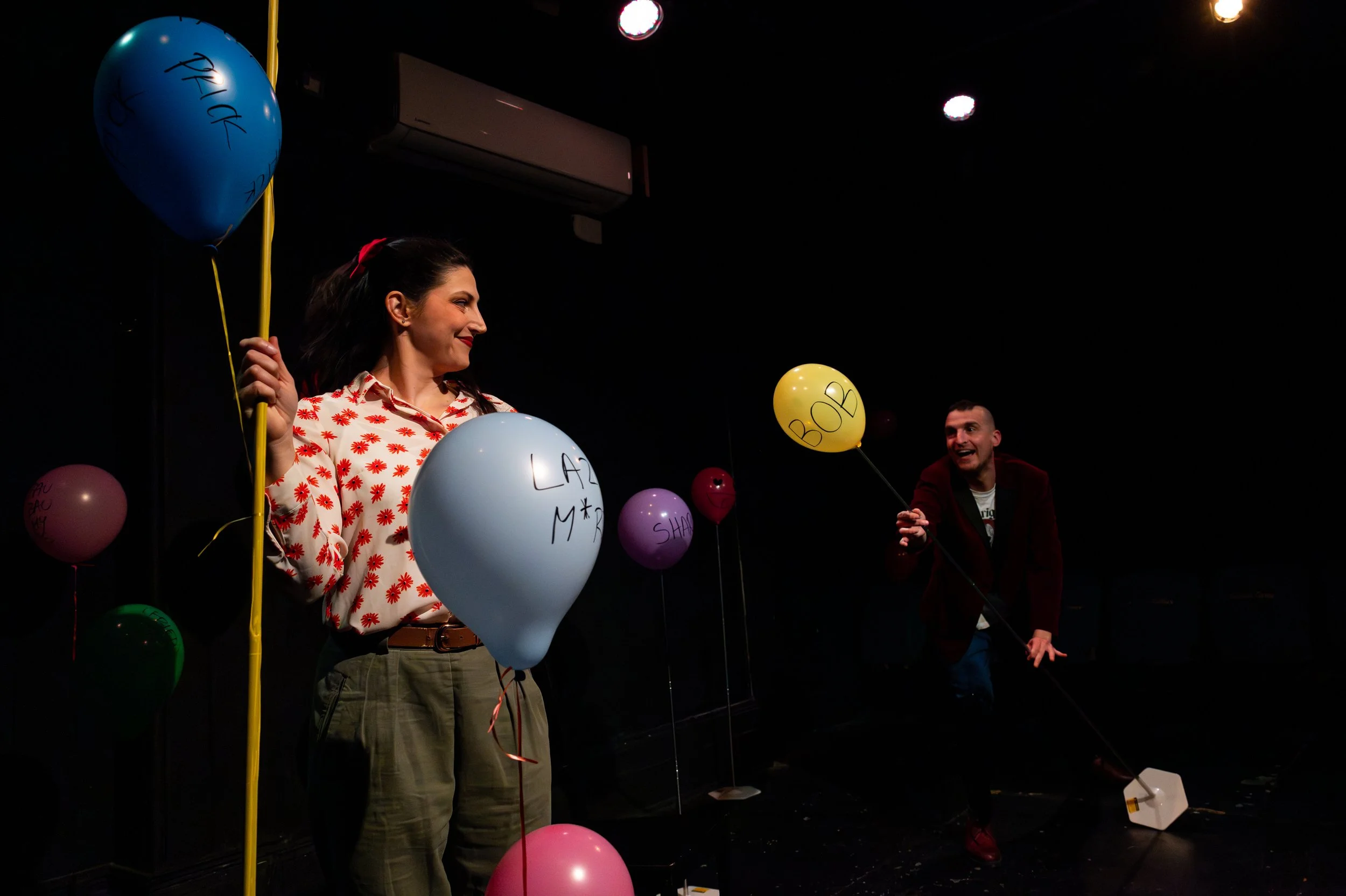
Chiara Fumanti is the co-founder of Stage Leftovers, alongside her fiancé. She is also the writer and producer of their brand-new play, The Extraordinary Life of a Rat Racer, a story that aims to raise awareness around intrusive thoughts and open up a conversation about what it even means to be "normal."
Ticket Link:https://www.edfringe.com/tickets/whats-on/the-extraordinary-life-of-a-rat-racer
Venue: Studio at theSpace @ Niddry St AND Space 2 at theSpace on the Mile
When: 7th -22nd August (not performing on 16th)
Could you tell us a bit more about yourselves and what the show is all about?
Stage Leftovers is an accent-blind theatre company founded by myself and my fiancèe Andrea. We are a very young company, founded because we don’t think there is enough representation of migrant artists in the theatre industry at the moment, and we’d like to be part of the change. We’d like to help create a theatre in which accent is incidental - unless fundamental – rather than a cage that keeps actors in niche, stereotypical roles.
The Extraordinary Life of a Rat Racer is our first play. It’s the story of a single mother, Eva, just trying to go to a job interview – but on the commute, she is tormented by a series of ever-worsening intrusive thoughts, which are personified in the character of Arthur. The show aims to raise awareness around this topic and to open up the conversation around what even is “normal”. It takes the darkest parts of the protagonist, puts them up in glittery trousers and exhibits them in a circus-like yet gruesome display that is both absurdly funny and deeply unsettling.
The listing mentions that the audience gets to dive into Eva's mind. How do you use the lighting, sound effects, and stage design to make the audience actually feel what is happening inside her head?
We use a few tricks. It all starts with the venue choice: the play suits small, intimate spaces that almost feel a little claustrophobic. It also works best when it’s performed on a thrust or corner stage – I think it gives the play a further sense of the walls closing in. This type of stage also adopts a more symbolic meaning as the protagonist’s backstory is revealed (but I won’t spoiler!). Moreover, the whole play really relies on one word – “imagine”. At the beginning of the play, we joke about this being due to budget (and to some extent, I guess it is!), but really, it was a creative decision we took in order to make the audience actively engage, rather than just watch. Not only does Arthur ask the audience to picture the scene before introducing characters and situations, but he then follows with detailed, graphic descriptions of what to imagine, which brings the audience straight into Eva’s intrusive thought. The audience also quite literally talks to Eva’s mind: Arthur often breaks the 4th wall, building tension, offering some comedic relief, keeping the audience on their toes – just as he does with Eva.
In terms of technical choices, there are different lighting states and SFX during the intrusive intrusive thoughts, as well as in the dialogues between Eva and Arthur and the dialogues with Eva and her mum – the separation between the real world and the world inside her head is emphasises by the lighting and sound, but as the play develops, the states start bleeding into each other, just as the two worlds do.
Dealing with dark themes like intrusive thoughts and anxiety through comedy can be a tightrope walk. How do you know when a moment is working? Has audience feedback changed how you play those darker scenes?
Well, it’s interesting – if anything, audience feedback has told me that the play is funnier than I thought! In fact, we originally defined the play as a surreal drama, and only after our first couple of nights in front of an audience did we decide to switch it to “surreal dark comedy”. Although balancing the comedy and the darker parts can definitely can be a bit of a tightrope. And especially when breaking the 4th wall, it can be really hard, as you can’t predict how the audience is going to react – especially when you are creating a tense atmosphere, and they feel a bit on edge (which is the aim!). And more than the darker scenes, what has occasionally tripped us up has been the response to the comedy. Some audiences are going to laugh out loud at a joke about suicide. Others won’t feel as comfortable, but it doesn’t mean that they don’t find it funny. Especially on the quieter nights, they might feel a bit exposed. If you don’t get a laugh where you normally get a laugh, it can make you doubt yourself and your choices. But I think sometimes, especially when you are dealing with sensitive topics that you feel very close to, you have to trust yourself, both as an actor and as a writer/director.
What was the original spark or idea behind this story? What drove you to write it, and what made you want to bring it specifically to the Edinburgh Festival Fringe?
The story itself is semi-autobiographical. The intrusive thoughts depicted in the play are thoughts that I had myself, and the backstory is also a real-life situation that happened to me when I was younger. Writing for me has always been a way to exorcise my demons; a way to process and rationalise events. So it was only natural for me to go into my feelings when Andrea and I were looking to put on something of our own and didn’t really know where to start. I had had this idea of a story only written through anxiety-led thoughts for some time now: first, it was meant to be a short story, then a short film depicting this girl on the tube, with sudden cuts to the intrusive thoughts she was having. Then one day we sat down, started brainstorming ideas, and we wondered: would the intrusive thought idea work as a play? And now we’re here!
Bringing a show to the Edinburgh Festival Fringe has been a goal of mine for some time now. My dream is to keep writing and performing in my own work, and I just don’t think there is a better place than Edinburgh to get started!
Putting on a show at the Edinburgh Fringe is a massive achievement. What has been the most unexpected challenge, or the most rewarding moment, of bringing this specific production to life so far?
I think I have the same answer for both questions: working together as a couple! When you are a couple and work in such a close environment, with nobody else around, the patterns that you already have as a couple can get extremely emphasised. We really had to work through loads of hurdles and loads of trial and error to find a way to work together that is productive, but that at the same time allows us to have some time for ourselves outside of the show. But at the same time, there is no feeling more rewarding than sharing the stage with the person you love most in the world.
On a more technical level, one challenge has actually been the autobiographicity of the piece. It’s been hard for both of us to find some sort of objectivity in a piece that is so deeply personal. For me, it was difficult finding a safe way to access emotions every night. The more I kept imagining the scene I went through (which I describe in graphic detail throughout the show), the more I felt distant from it. I think my body went into some sort of “safe mode”, I became sort of numb to it. It wasn’t until I gave myself some completely unrelated tricks that I was finally able to feel more connected again.
At the same time, Andrea’s challenge was directing me in a piece I had not only written, but lived through. But he was absolutely brilliant – especially when I was trying to find tricks to connect to the character. He gave me some tips, listened to me when I had a series of pre-rehearsal requests that I thought might help me (drama queen), and focused a lot of time just chatting things through. So all in all, yes, the biggest challenge AND biggest reward has been working together.
If you had to describe the show in only three words to make people absolutely eager to see it, what would they be?
There are balloons!
But seriously:
Tense, funny, weird.