Interview: Isabelle Pettite - Space Cadet:
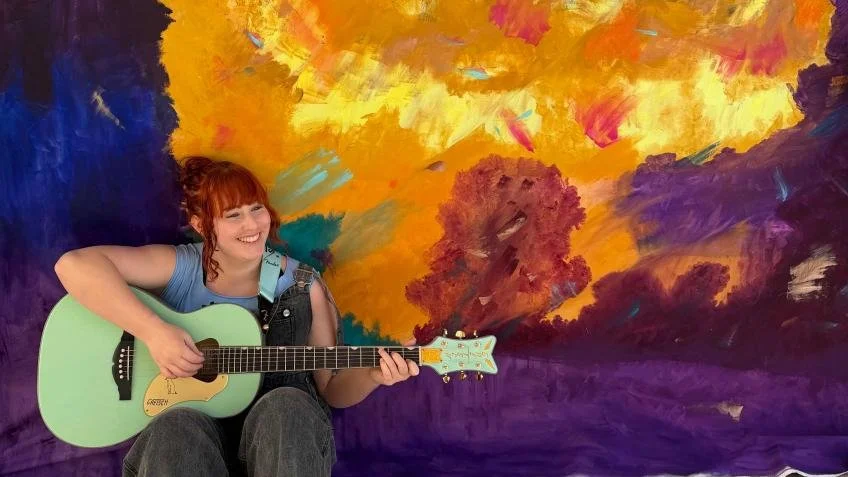
Isabelle, aka Izzy, is a 24-year-old neurodivergent actor-muso bringing her show Space Cadet to the Edinburgh Fringe Festival this August. With her show, she hopes to entertain audiences while empowering neurodivergent people to feel seen, represented, and proud of their differences. Ultimately, she aims to challenge neurotypical perspectives and celebrate the idea that difference does not equal deficit.
Ticket link: https://www.edfringe.com/tickets/whats-on/space-cadet
Venue: Just The Wee One at Just The Tonic at The Caves
When: 8th - 30th August (not performing on 11th, 18th & 25th)
Could you tell us a bit more about who you are and what the show is all about?
Hi, I’m Izzy, I’m 24 and I’m a neurodivergent actor-muso. I’m terrified of worms, and I gag at the smell of baked beans. Space Cadet is a show that celebrates the unique perspective of a neurodivergent brain, while also showcasing the highs and lows of neurodivergence. To be honest, Space Cadet is the answer I’ve been trying to find my whole life about why I am the way I am. I just never had the words to explain it before.
It is such an important, yet often unspoken topic. How did you come up with the idea to create a show about neurodivergence, and what inspired you to bring it to the Edinburgh Fringe Festival this year?
The show originated from a conversation I had with Nikki, my co-creator; we were discussing emotions and how I express them. I have alexithymia, so it’s hard for me to identify and process emotions. I also experience emotions differently, for example when I’m sad I feel an ache in my ears and it’s the colour purple – I don’t know how to explain it other than that. Anyway, while we were talking about my slightly different ways of experiencing emotions, I was struggling to get my thoughts out and Nikki asked me if I’d ever written a song. I replied with no, I haven’t, and she said why don’t you have a think and see if you could turn what you’re struggling to say to me into a song. I was dubious to say the least, I think I replied in the moment with “I don’t think I’ll be able to do that, but I’ll give it a go.” Then a week later I returned with a song I’d written about it all. From then on, I really couldn’t be stopped; it was quite a euphoric experience, because I discovered I could sing far more things than I’d ever been able to say. Suddenly I was able to explain my brain in a way I’d never been able to before, despite years of trying. Without even realising, I’d written ten songs that I hoped would not only help me put words to the things that go on inside my brain, but also so many other members of the neurodivergent community. This musical is for every single neurodivergent person who knew they were different but never had the words to be able to explain why.
Once the songs were written, I knew we had a powerful message to share, we’re pushing boundaries and shattering stereotypes, so I thought where better to start Space Cadet’s journey than Edinburgh Fringe which is known for daring, trailblazing new work and is such an exciting festival to be a part of. It’s also such a great place to start conversations, and that’s another aim of the show – to spark conversations and bring about change. Neurodivergent people deserve to have a voice, and they deserve to see characters that don’t rely on outdated clichés on platforms like theatre and tv. I’m really honoured we get to share our work at such a prestigious festival, it’s all very exciting!
You describe the musical as a journey through "colour, chaos, and confusion." How does the structure of the musical change to reflect these shifts in state as the story progresses?
Ah, what a great question, I love it! Unfortunately, I may have to disappoint you a little as I don’t want to give too much away… What I will say is that there is an element to Space Cadet which makes it a unique audio-visual experience; all the colours I see, whether they belong to a person, emotion or a piece of music, the audience will also get to see. The show is almost my way of putting an armchair inside my brain and letting the audience make themselves comfortable for an hour as they get to see the world from my perspective. The music also reflects the journey through these shifts in state, in more ways than one; it allows me to build the correct atmosphere, and soundtrack the part of my life I’m trying to explain perfectly.
You've partnered with Dyspraxia UK as a sponsor for Space Cadet. Could you share a bit about what that organization means to you personally, and how that collaboration impacts the authenticity of the show?
Yes, it would be my pleasure! Dyspraxia UK means a huge deal to me as they were the organisation that I went through to receive my dyspraxia diagnosis nine years ago. They helped me to begin on this journey of discovering my neurodivergence, and had it not been for them facilitating my diagnosis, I likely wouldn’t have also discovered I’m Autistic and have ADHD too. Also, without their support after my diagnosis, writing to the school with a forty page report and detailed learning plan to help them meet my needs, I likely would’ve failed my exams and would never have been sat here today. To say I am immensely grateful for their work is an understatement. In terms of impacting the authenticity of the show, the collaboration does not do that at all. Space Cadet was already written before I contacted potential sponsors and the experiences I share in the show are truly my own, with no external input; the only people who have had any input are myself and Nikki. Dyspraxia UK simply responded to my email offering me sponsorship as they believed in the message of the show.
What do you hope audiences will take away after seeing the show?
I hope all audience members take away a feeling of being thoroughly entertained, and that they see the world from a slightly different perspective after experiencing the show. I hope that neurodivergent audience members feel seen and represented; I hope they feel proud of their difference and empowered to believe in themselves and advocate for themselves. I hope that neurotypical audience members come away with a new-found appreciation for the neurodivergent mind, and that upon reflection, they discover some of their preconceived notions about neurodivergence may not be accurate after all. One of the main aims of the show is to promote the idea that difference does not equal deficit, I think we all forget that sometimes. At the end of the day, it doesn’t matter how your brain works, everyone is wanted and welcome at Space Cadet and I’d just love you to come away feeling like you’ve seen a great piece of theatre.
If you had to describe the show in only three words, what would they be?
Daringly, delightfully different