Interview: April Alsup - Broadside
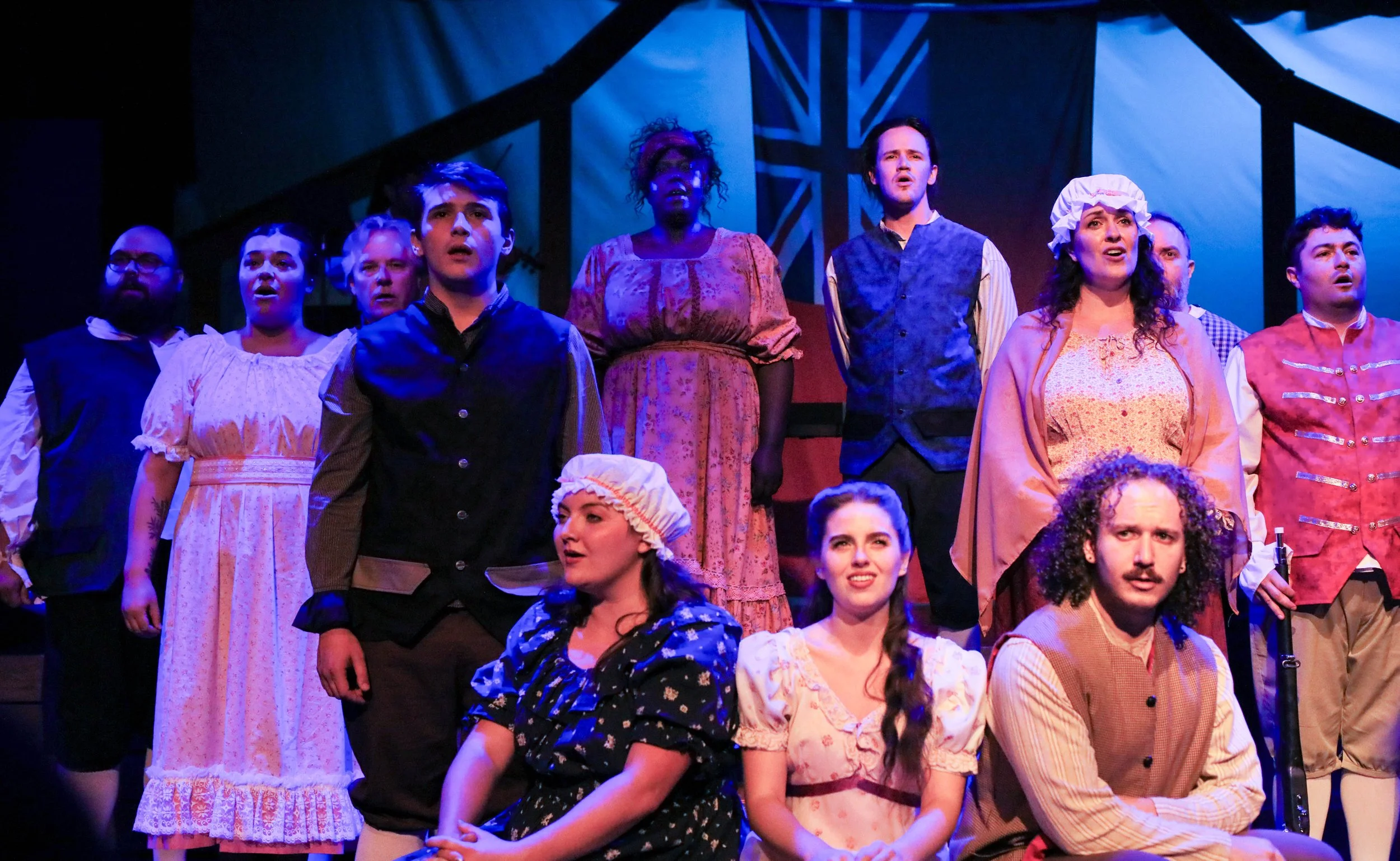
April Alsup is the composer and librettist behind Broadside, an original new musical making its way all the way from New York to this year's Edinburgh Festival Fringe.
Set during the American Revolution, Broadside brings history to life through the voices of ordinary citizens, printers, and rabble-rousers who used paper, press, and persuasion to change the course of history.
Ticket link: https://www.edfringe.com/tickets/whats-on/broadside
Venue: Willow Studio at Greenside @ Riddles Court
When: 7th - 15th August
Could you tell us a bit more about yourself and what the show is all about?
I'm a composer and librettist who creates original musical theatre, usually centered on moments in history where ordinary people unexpectedly change the course of events. I've always been fascinated by the stories hiding between the headlines, the people history nearly forgot. Broadside tells the story of the American Revolution through the printers, writers, and everyday citizens who spread ideas before there was social media, radio, or television. The broadside, a single sheet of printed paper, was how news, opinion, and propaganda reached the public. In many ways, it was the first social media feed. Rather than focusing solely on famous names, we explore how ideas traveled through taverns, print shops, and city streets, and how those ideas inspired ordinary people to become part of something much larger than themselves.
You’re coming all the way from the US—why did you want to participate in this year's Fringe?
Edinburgh Fringe has become an important part of our creative process. This is our fourth consecutive year bringing an original musical to Scotland, and there's simply nothing else like it. You have audiences from around the world, hundreds of artists exchanging ideas, and an environment where new work is genuinely celebrated.
The Fringe gives us the opportunity to see how our stories resonate with people from completely different backgrounds. If a musical about the messy relationship between Britain and America can engage audiences in Scotland, you know you've tapped into something more universal than history. At its heart, Broadside is about who gets to shape public opinion, whose voices are heard, and how ideas spread questions that feel just as relevant today as they did 250 years ago.
What musical styles inspire the score? How do you balance 18th-century sound with contemporary musical theater energy?
The score borrows melodies, rhythms, and instrumentation from the eighteenth century, but it isn't a museum piece. We weave together period influences with contemporary musical theatre, folk, pop, gospel, and even a touch of rap.
The goal isn't historical imitation, it's emotional authenticity. Whenever possible, we let the world of 1770 shape the musical language, but when a modern style better captures the energy of a moment or helps an audience connect with a character, we embrace it. History may be old, but the emotions are timeless.
What is the biggest challenge, or delight, of adapting a show like Broadside for a fast-paced Fringe schedule?
The biggest challenge is learning how much story you can tell in sixty minutes. Every scene, every lyric, and every transition has to earn its place. There's no room for anything that doesn't move the audience forward.
The delight is discovering just how powerful simplicity can be. A few crates become a dock, a printing press becomes a courtroom, and a single broadside transforms into the spark that changes history. Fringe audiences have incredible imaginations, and they meet you halfway. That's one of the things I love most about performing there.
What do you hope the audience will take away after seeing the show?
I hope audiences leave thinking about the power of ideas. Governments rise and fall, technology changes, but people are still persuaded by stories, by information, and by the conversations they have with one another. I also hope they discover that history isn't just about famous figures. Revolutions are built by printers, teachers, musicians, neighbors, and ordinary people who decide their voices matter. That's a story that belongs to every generation.
If you had to describe the show in only three words to make people eager to see it, what would they be?
Revolution. Humanity. Recursive